Introduction
The last guide covered building a content strategy for agribusiness — defining audiences, mapping content to the buyer’s journey, and measuring what matters. Now, let’s shift focus to something every farmer and producer faces: finding fresh, engaging content ideas that actually connect with the people who matter most.
The truth is, most agricultural content fails because it tries too hard. It’s either a sales pitch no one asked for or polished corporate-speak that doesn’t sound like real people talking.
Your content doesn’t have to be perfect. It just has to be real .
Rural audiences value honesty, humour, and heart over polish and perfection . This guide gives you practical topics and formats that respect your time and your audience’s intelligence — whether you’re a small-scale vegetable grower, a livestock producer, or somewhere in between.
H2: Mine Your Daily Life for Content Gold
The single most overlooked content source sits right in front of you every day: your farm.
What feels “normal” to you is fascinating to someone outside your world — and relatable to those in it . A 10-second video of mustering, a quick photo of lunch in the paddock, or a shot of sunrise over your fields can spark incredible engagement without requiring hours of planning.
H3: Content Ideas From Your Routine
- Morning starts: Film sunrise over your property, the quiet before the work begins
- The mess and the magic: Show the dust, the mud, and the machinery — authenticity beats sterility
- Behind-the-scenes: What happens after the gates close? This is what people actually want to see
- The human element: Your hands on a gate, your shadow in the field, a moment of exhaustion or celebration
Why it works: This content builds emotional connection. Consumers and community members want to know the humans behind their food . When you share real moments, you’re not just marketing — you’re building trust.
H2: Listen to What Your Audience Is Talking About
If you want your content to land, you need to know what’s already on your audience’s mind. What’s keeping them up at night? What are they celebrating? What confuses or frustrates them?
H3: Where to Listen
- Local Facebook groups: Monitor questions, complaints, and conversations
- Agricultural podcasts: Hear what industry voices are discussing
- Industry newsletters: Stay across sector-wide trends and challenges
- Community events: Keep your ear out at the footy, cricket, school drop-off, or the local show
- Online tools: Google Trends can reveal what people are searching for
H3: Turn Questions Into Content
Every question you hear from a customer, neighbour, or follower is a potential blog post. Got a good question in your DMs? Turn it into a FAQ post or a reel . Noticed confusion about a new regulation or practice? Create content that clears it up.
H2: Anchor Content Around the Seasons
In agriculture, everything’s seasonal — and so should your content be. What matters in summer doesn’t necessarily hit the same in winter .
H3: Seasonal Content Calendar Ideas
| Season | Content Focus |
|---|---|
| Sowing/Planting | “How to prepare your soil for spring”, variety selection guides |
| Growing/Grazing | Pest management checklists, irrigation tips, “why we do X” explainers |
| Harvest | Behind-the-scenes harvest footage, “from field to fork” stories, what we’re picking now |
| Winter/Off-season | Planning and preparation, equipment maintenance, looking back on the year |
H3: Anchor to Local Events Too
Don’t just think weather — think community:
- Local show dates
- Field days and industry events
- School holidays (if you offer farm visits or school programs)
- Public holidays and seasonal celebrations
When you align your content with the rhythm of rural life, you show you understand your audience’s world.
H2: Build Content Around Your Core Pillars
Instead of posting randomly, focus on 3–5 core content themes that reflect your business, your audience, and your goals .
H3: The Four Key Pillars
1. Educate
Explain what you do, how it works, and why it matters. Position yourself as a trusted expert, not a product pusher .
Topics: Soil health basics, livestock nutrition, sustainable techniques, seasonal checklists.
2. Entertain
Show the funny, raw, or relatable side of farm life. This builds connection and humanises your brand .
Topics: “A day in the life,” funny animal moments, weather challenges, equipment fails.
3. Promote
Talk about your products, services, or events — but don’t make every post about selling. The 80/20 rule works well here: 80% value, 20% promotion.
Topics: What’s for sale, upcoming events, special offers, new offerings.
4. Inspire
Share quotes, achievements, or user-generated content. This builds community and reinforces positive feelings about your farm or business .
Topics: Customer stories, milestones, beautiful moments on the farm, farmer spotlights.
Rotate through these pillars so you’re not always selling and you’re consistently adding value .
H2: Concrete Blog Topic Ideas for Any Farm
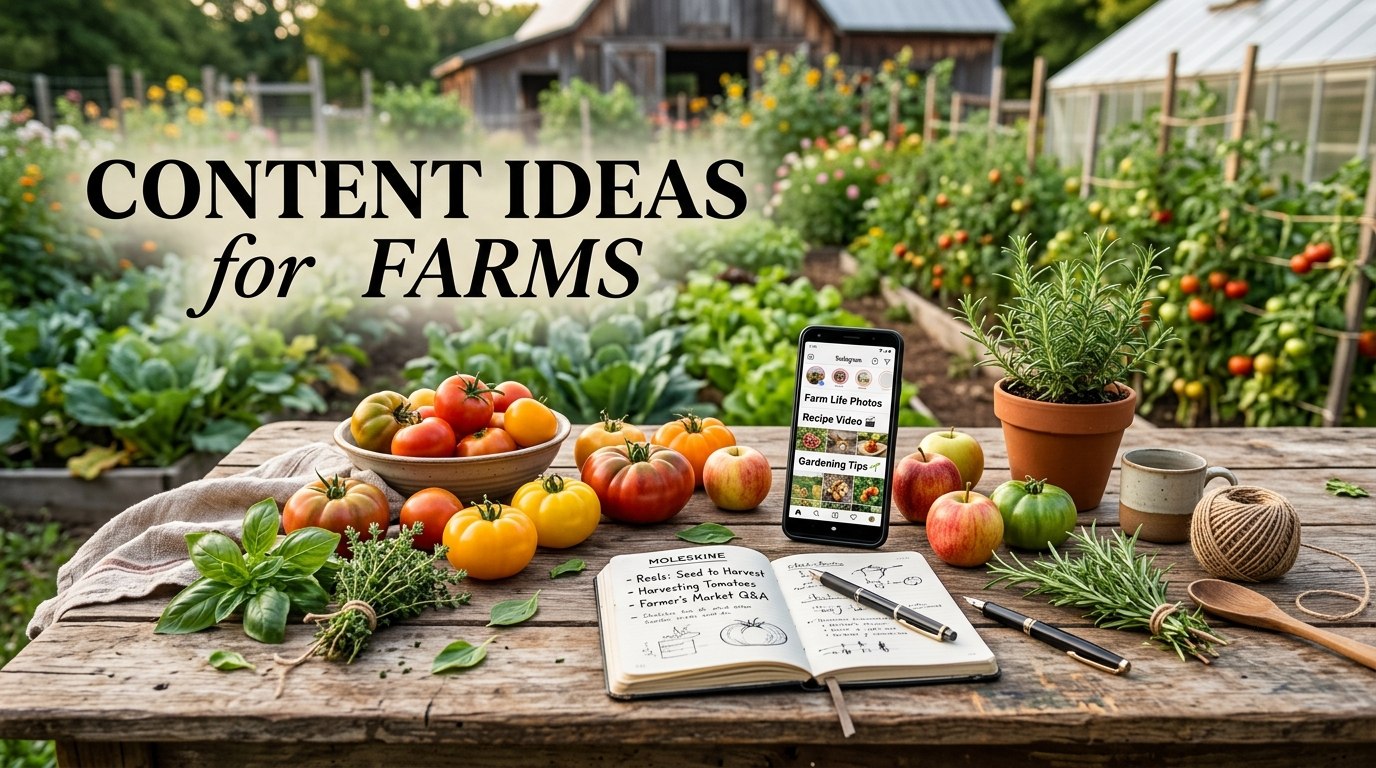
If you’re staring at a blank page wondering what to write, here are eight proven blog post ideas specifically tailored to farms and agribusinesses :
H3: 1. Share Your Farm’s Unique Story
What’s the story behind how you started? What lessons have you learned? What does a usual day look like? People love to know the humans behind a business — this turns your farm into more than just a name .
How to structure it: Start with why you farm, then share a memorable moment, then reflect on what it means to you.
H3: 2. Show Transparency in Your Practices
Consumers are more aware of where their food comes from than ever before. Use your blog to showcase what sets your processes apart .
Ideas: Why you use specific farming methods, explain your animal husbandry practices, share challenges you’ve faced and overcome. Transparency builds trust.
H3: 3. Highlight Seasonal Changes
Use seasonal produce and visual changes to build excitement. Show photos of fields coming to life in spring or pumpkins ripening in fall .
Why it works: This is visually engaging and naturally drives anticipation for what’s coming.
H3: 4. Farm-to-Table Recipes
Share simple recipes made with your farm’s produce . This creates a direct link between your goods and your customers’ lives.
Ideas: “Sweet Corn Chowder Recipe” during summer, “Pumpkin Pie from Scratch” in fall. Add “How to Make” to recipe post titles for SEO benefit — that’s what people actually search for .
H3: 5. Highlight Your Sustainability Efforts
Write about how your farm reduces waste, conserves water, or supports pollinators . Modern consumers increasingly want to support businesses that align with their values .
Ideas: Composting practices, water management, pollinator habitat, organic transition journey.
H3: 6. Spotlight Specific Crops or Products
Educational posts like “All About Kale: From Seed to Plate” serve as great social media cross-content and position you as an expert .
Ideas: Your favourite variety and why, growing tips, harvest timing, nutritional benefits.
H3: 7. Highlight Local Collaborations
Do you supply to local restaurants, markets, or food producers? Blog about these partnerships . It boosts credibility and shows your involvement in the community.
Bonus: Encourage partners to link back to your blog — backlinks are SEO gold.
H3: 8. Customer Stories or Testimonials
Feature your customers occasionally, sharing their favourite farm products or experiences . This gives fresh perspectives while showing the community behind your farm.
H2: Tell Stories, Not Just Sell Products
Agriculture is often misunderstood by consumers, policymakers, and the general public. A U.S. Farmers & Ranchers Alliance survey found that more than half of U.S. consumers admit they know little or nothing about farming or ranching, yet they care deeply about where their food comes from .
This presents a huge opportunity: by telling real stories, you bridge the knowledge gap and advocate for the industry while promoting what you do.
H3: Storytelling That Resonates
- Feature real people: Let farmers and producers tell their own stories
- Show challenges and successes: Authenticity builds trust
- Use behind-the-scenes content: Give people a window into your world
- Make it visual: High-quality video and drone footage can showcase farming in ways words can’t
H3: Fighting Misinformation
Consumers are bombarded with misleading information about farming practices. Position yourself as a source of truth :
- Share fact-based content backed by studies and real-world data
- Use infographics and short videos to make information digestible
- Partner with trusted agriculture influencers to amplify messages
What Thanh Truong (‘The Fruit Nerd’) knows: Successful agricultural storytelling doesn’t preach to the converted. It reaches further down the supply chain to consumers, addressing their questions and concerns directly .
H2: Repurpose Content to Save Time
You don’t need to start from scratch every time. One idea can be repurposed across multiple platforms and formats :
- Write a blog post? Pull three key quotes into a carousel for Instagram
- Got a good question in DMs? Turn it into an FAQ post or a reel
- Feature a product in a story? Screenshot it and post to your grid
Efficiency equals consistency .
H3: Content Recycling Ideas
| Original Content | Repurposed Formats |
|---|---|
| Blog post | Social posts, email newsletter, video script |
| Video tutorial | Blog post transcript, social clips, YouTube short |
| Podcast episode | Show notes, quote graphics, LinkedIn post |
| Webinar | Blog summary, shareable slides, Q&A post |
H2: Practical Tips for Better Agriculture Content
H3: Simple Content Rules
- Use clear headings: Help readers scan your content quickly — they’re making quick decisions
- Keep paragraphs short: 2-3 sentences, one idea each
- Put important information first: Answer the key question early
- Use natural language: Write like you speak. Avoid jargon unless it’s necessary for your audience
- Include visuals: Images, charts, and infographics break up text and make content more engaging
H3: Calls to Action That Work
- “Book a paddock walk”
- “Download the spray timing guide”
- “Have a question? Send me a message”
- “Want to know when this is ready? Join my email list”
H2: Key Takeaways
- Your daily routine is content gold — don’t overthink it, just share it
- Listen to your audience — their questions are your content ideas
- Anchor content around seasons — align with the rhythm of rural life
- Rotate content pillars — educate, entertain, promote, inspire
- Repurpose everything — one idea can be turned into multiple pieces
- Tell real stories — authenticity beats polish every time