Introduction
You know that feeling. It’s 8pm. You’ve been in the paddock since sunrise. The last thing you want to do is stare at a blank screen and ask yourself, “What on earth am I going to post tomorrow?”
You’re not alone. For many farmers and agribusiness owners, the constant need for “fresh content” is the most draining part of marketing. It feels like a hamster wheel—especially when you have a farm to run.
But here’s the reality: good content doesn’t have to be complicated. You don’t need to be a professional marketer or an influencer. The best content ideas are often hiding in plain sight, embedded in your daily work. This guide is designed to give you a practical, sustainable system for finding and creating content that actually resonates.
H2: Rethink Your Mindset: It’s Not About “Posting,” It’s About Sharing
The first step to never running out of ideas is a mental shift. Stop thinking about content creation as a “marketing chore.” Instead, think of it as a way to bring people onto your farm for a moment.
Farmers are practical people. They don’t want to be sold to; they want to connect with real people and understand the story behind their food. Content that shows transparency and tells an authentic story builds trust—and trust is the most valuable currency in direct-to-consumer sales. Your everyday life is the raw material for this storytelling.
H2: The Three “Mines” of Content Gold
Instead of staring at a blank page, start looking in these three “mines” for unlimited content ideas.
H3: 1. Your Daily Routine
Your daily routine is content gold. What feels normal to you is fascinating to your customers. They have no idea what it takes to get food from a field to their table.
Actionable Ideas:
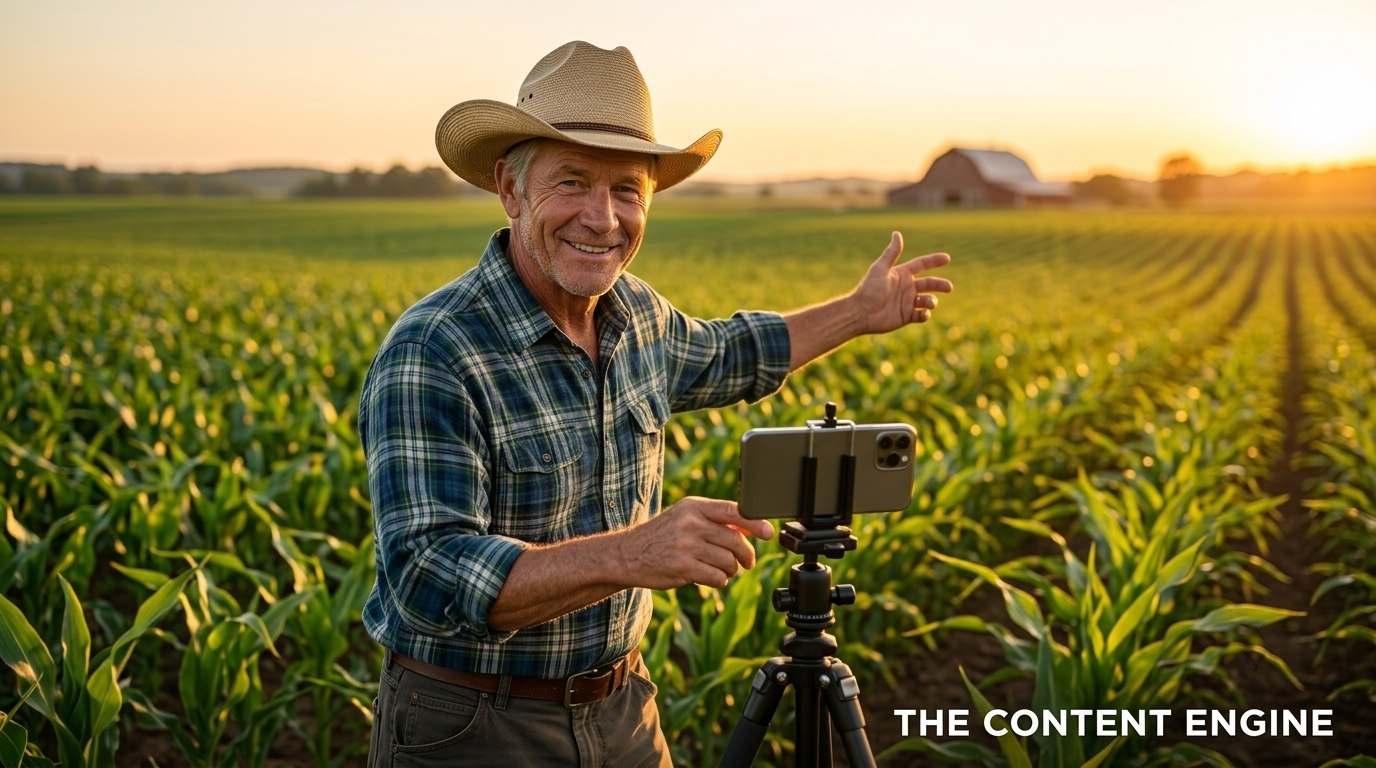
- The “Explain This” Video: Take a 30-second video of a routine task and explain why you’re doing it.
- Example: Show a stalk of Brussels sprouts in the field and explain the ‘topping’ process. As you film, narrate, “Right now, we’re snipping the growing tip off these Brussels sprout plants. This tells the plant to stop growing taller and put all its energy into sizing up the sprouts. And here’s the secret: a touch of frost later will make them sweeter!”
- The “Scouting” Walk: Share a short video while you’re walking through a crop, looking for pests. Explain that this is part of your Integrated Pest Management (IPM) strategy, showing customers that you’re proactive about quality and sustainability.
- Golden Hour: Farm life is visually stunning. Post a quick photo of a beautiful sunrise or sunset at the end of a long day. It’s a simple way to connect on a human level.
- The “Real” Moment: Show the dust, the mud, or the humorous side of a breakdown. Authenticity trumps a “perfect” image.
H3: 2. Your Audience’s Questions and Industry Trends
If you want your content to land, it needs to answer the questions on your audience’s mind. Listen to what’s being discussed in local Facebook groups, at the local show, or by speaking to customers at your farm gate. Don’t just listen to the questions people ask you; listen to industry conversations.
Actionable Ideas:
- FAQ Posts: Take a frequently asked question from your customers and turn it into a dedicated post or story.
- Myth Busters: Address a common misconception. For example, a post explaining a farming practice in simple terms.
- Industry News & Trends: Share a relevant article and give your take on it. Position yourself as an expert.
H3: 3. The Seasonality of Your World
In agriculture, everything is seasonal—and your content should be too. The rhythm of your farm provides a built-in content calendar.
Actionable Ideas:
- Behind-the-Scenes of the Season: Share what’s happening right now—whether it’s lambing, planting, harvest, or winter planning.
- Seasonal Content Pillars: Create a group of posts around a central seasonal theme. For example, during spring, you can create content pillars like “Spring on the Farm Tour,” “Planting Techniques,” or “Spring Flavor Drops”.
H2: The 4 Content Pillars: Your “Rotate” System
To ensure you’re providing value and not just selling, structure your content around these four key pillars:
- Educate: Explain what you do, how it works, and why it matters. This builds you as an expert.
- Entertain: Show the funny, raw, or relatable side of ag life. This builds connection.
- Promote: Talk about your products, services, or events. But remember the 80/20 rule: 80% value, 20% promotion.
- Inspire: Share quotes, achievements, or user-generated content. This builds community.
By rotating through these pillars, you’ll never be constantly selling, and you’ll always be adding value for your followers.
H2: Advanced Strategies for When You’re Feeling Stuck
H3: Content Contests
Contests are a powerful way to boost engagement and generate a wealth of user-generated content. For example, a photo contest encouraging customers to share their best farm sunset picture not only creates a sense of community but also provides you with authentic, promotional content you can use for months.
H3: Repurposing Content
You don’t need to create something new for every platform. Turn a blog post into a short video, a series of social media posts, and a section in your email newsletter.
H3: Email Marketing
Email is one of the most effective ways to directly connect with your customers. Use it to share exclusive content, farm updates, recipes, and behind-the-scenes stories. Build your email list through sign-up forms at your farm, events, and on your website.