Introduction
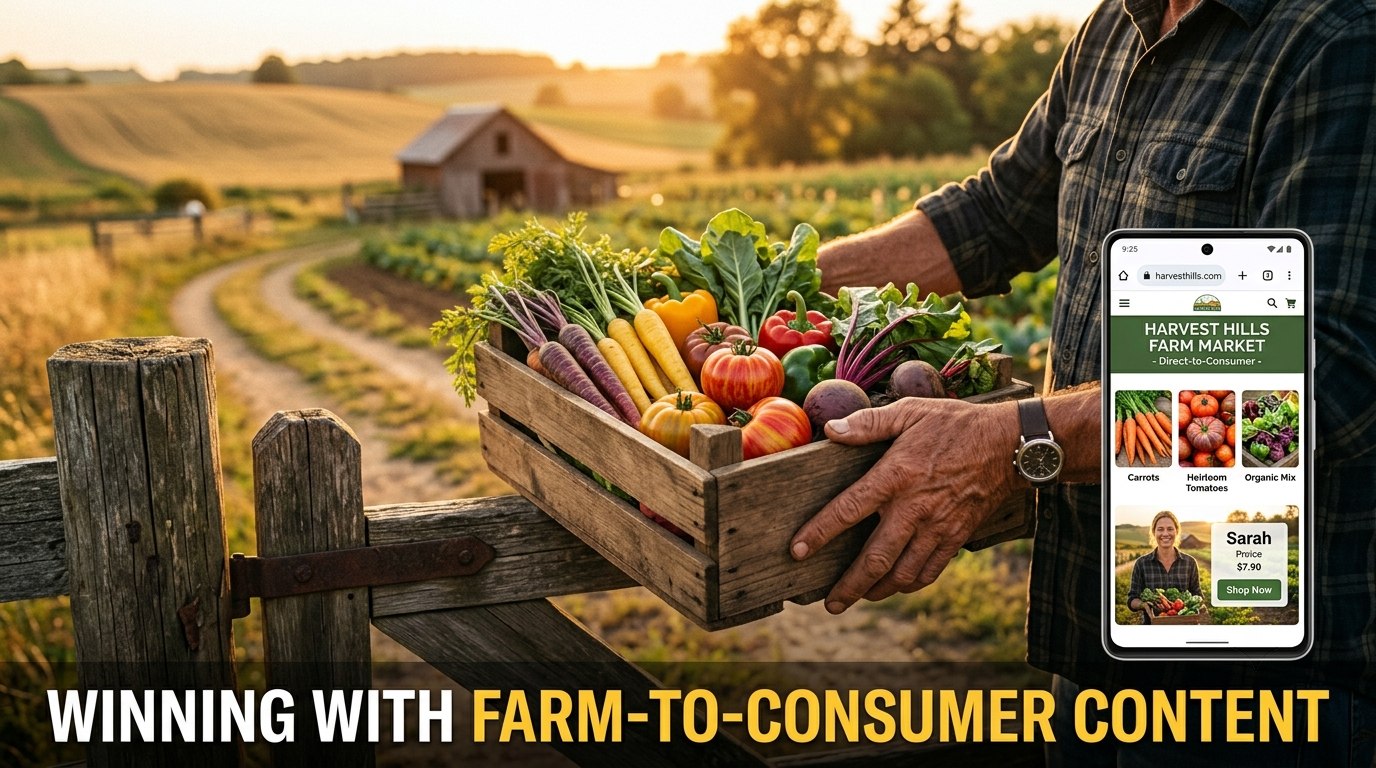
If you have ever wondered whether video content is worth the effort for your farm or agribusiness, consider this: U.S. agricultural producers sold $17.5 billion worth of food directly to consumers in 2022—a 25% increase since 2017 . That’s not a trend; it’s a fundamental shift in how people want to buy food. And the farmers capturing this growing market are the ones using video to tell their stories.
Here is an uncomfortable truth: consumers are increasingly disconnected from where their food comes from. Younger generations are turning to social media as their primary news source . If agriculture does not tell its own story, someone else will—and it will probably not be flattering .
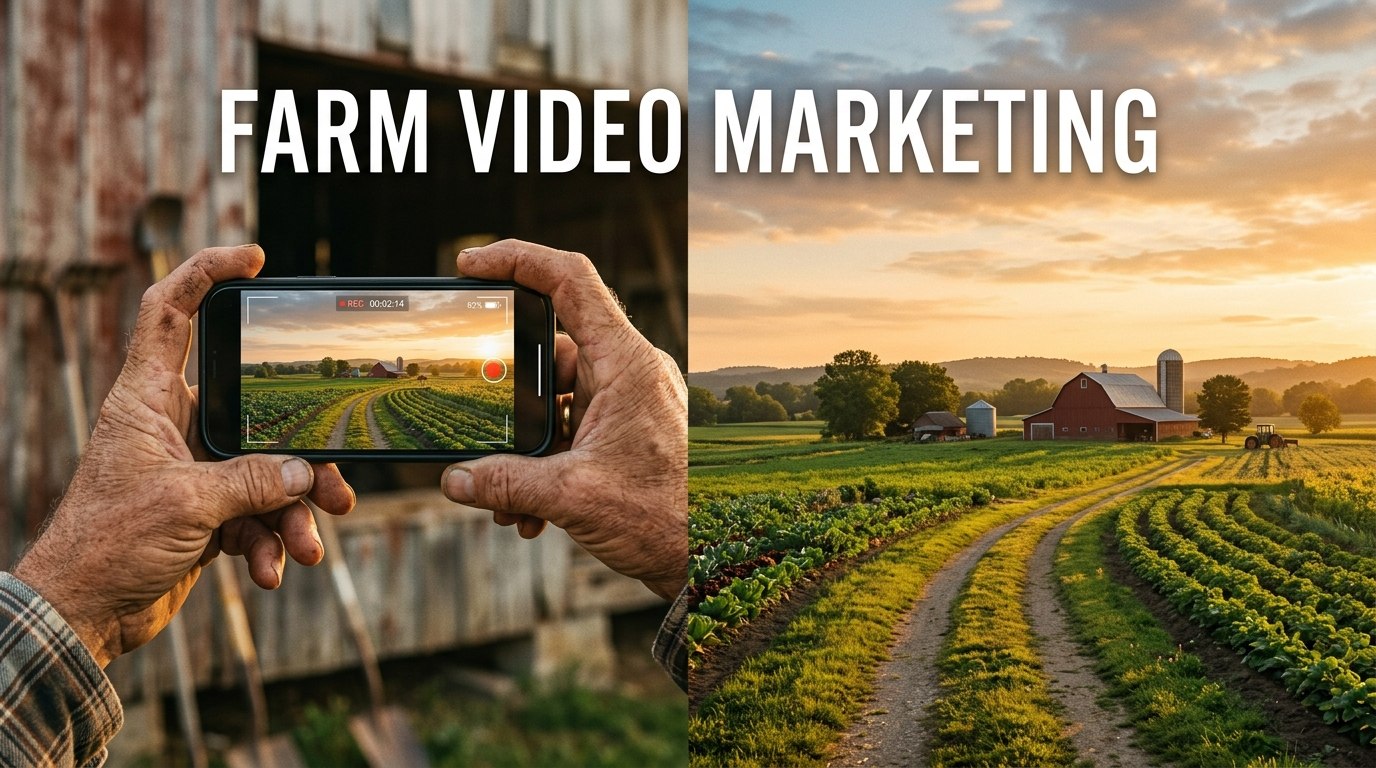
The good news is that you don’t need a Hollywood budget. You don’t need to be a professional videographer. You just need to be you—a farmer with something genuine to share.
This guide cuts through the noise to show you exactly how to create video content that builds trust and drives sales. No fluff. Just practical, field-tested approaches from farmers who are doing it right now.
H2: Why Video? The Hard Numbers
H3: Trust Is Built Through Seeing
Video builds trust because it shows transparency. Consumers want to see where their food comes from with their own eyes . Research shows that content marketing centred on origin traceability and daily situational life significantly influences consumer trust . It reduces what researchers call “perceived risk”—the hesitation consumers feel when buying from an unfamiliar source.
When farmers share real, unpolished video of their daily operations, they are not just promoting their product. They are demonstrating authenticity and building credibility .
H3: Engagement That Drives Sales
Quality video content does more than just get views. It creates emotional identification, which research shows encourages consumers to share and recommend products . In plain English: when people connect with your story, they become your marketing team.
Thanh Truong, known as the “Fruit Nerd” on social media, has built a massive following by sharing educational food content. His online presence has led to a book, a TV series, and collaborations with major organisations . He believes agriculture needs to move beyond “preaching to the converted” and instead create content that resonates further down the supply chain—with consumers, not just other farmers .
H3: Video Is Now “King”
Industry experts are clear: video content is now “king” for any industry, including agriculture . Short clips, tutorials, and behind-the-scenes videos can go viral, attracting new audiences and driving engagement. For ag-focused businesses, capturing conversations on video and sharing highlights across platforms significantly expands reach .
H2: What Types of Video Content Actually Work
H3: The Five Types That Drive Results
Recent academic research using the LDA topic model identified five common types of content marketing for agricultural products :
| Content Type | What It Is | Why It Works |
|---|---|---|
| Origin Traceability | Showing where your food comes from | Builds trust through transparency |
| Daily Situational | Behind-the-scenes, day-in-the-life | Creates emotional connection |
| Product Recommendation | Showing your product in action | Demonstrates value |
| Key Opinion Leader | Expert interviews, educational content | Builds authority |
| Selling Pitiful | Awareness of struggles/challenges | Can work, but risks authenticity |
The most effective videos combine elements from multiple categories. For example, a daily situational video that also shows your product’s origin builds both connection and trust.
H3: The Alabama Extension Model
When the Alabama Cooperative Extension System recognised how many farmers had turned to direct sales during the pandemic, they created the “Faces of Direct-to-Consumer” video series . Each of the five videos highlights a real Alabama farm, covering everything from processing and packaging to pricing and connecting with consumers.
What makes this series effective? Authenticity. The creators left in real moments—pauses, laughs, and even unpredictable farm moments—because “that’s what makes agriculture relatable” .
As Extension agent Calen Monroe put it: “When farmers see other Alabama producers succeed, it can give them the confidence they need to try it themselves” .
H3: The “Fruit Nerd” Approach
Thanh Truong’s success offers a blueprint for agricultural content creators:
- Focus on education: His content teaches people about fruit and vegetables
- Make it positive: Rather than complaining about industry problems, he shares enthusiasm
- Connect with consumers: He considers “consumers, their purchase decisions, their empathy for, and their understanding of agriculture reflected in their content”
- Use social media as the platform: Traditional media has struggled to combat negative narratives, but social media offers a way to share “environmental outcomes and the industry’s progress, and people, comprehensively”
H2: Practical Video Creation Tips
H3: Hook Them in Three Seconds
On social media, you have about three seconds to grab attention . Start your videos with a strong hook:
- A surprising shot
- An intriguing question
- A clear value statement (“Here’s what we’re doing differently this season”)
H3: Keep It Real
Authenticity trumps production value. The Alabama Extension series intentionally kept raw moments . The farmers featured range from beginners to veterans—showing that “a wide range of people can succeed in this space” .
H3: Use Simple Editing Tools
You don’t need expensive software. Free or low-cost tools like CapCut or InShot can:
- Add captions (essential for viewers watching without sound)
- Trim clips
- Add basic transitions
- Speed up footage to create time-lapses
H3: One Video, Multiple Platforms
Don’t reinvent the wheel. Create one piece of video content and repurpose it:
- Full video → YouTube
- 60-second clip → Instagram Reels
- 30-second clip → TikTok
- Screenshot with quote → Facebook post
- Clip in email → Newsletter
H3: Stay Consistent
Consistency builds credibility. “The more that you see something, the more familiar you are with it—and the more you expect it to be there” . Even one video per week builds a following and trust with buyers .
H2: Real-World Success Stories
H3: Eve’s Hill Farm—Education and Transparency
Jeremy Buxton and his wife Kathryn run a 100ha holding in Norfolk with a Hereford suckler beef herd, farm shop, camping, and a popular farmers’ market .
What they do:
- Answer customer questions forthrightly and transparently
- Use FAQs on their website to anticipate what customers want to know
- Tell their story: “Why we are producing grass-fed beef”
- Host school visits—”they are our customers of the future”
Key lesson from Jeremy: “If a customer asks a question, we answer it forthrightly. Tell them your story, education is critical” .
H3: Strawberry Fields—Loyalty as Marketing
Laura Mounce runs Strawberry Fields in Devon, which has grown from a pick-your-own operation to include a farm shop, café, restaurant, and major seasonal events .
What they do:
- Free loyalty card scheme with points, vouchers, personalised discounts
- Email marketing with targeted offers (no meat promotions to vegetarian customers)
- Family-friendly events that are photo opportunities—customers do their marketing for them
- Fiercely protective of their brand identity, extending to packaging, labelling, and bags
Key lesson: High standards and community engagement build loyalty. People don’t just buy your products; they buy into your story.
H3: Vinaseed—Empathy Meets Digital
Vinaseed, an agricultural company in Vietnam, shows how digital marketing can work alongside on-the-ground presence .
What they do:
- Regular digital content: crop calendars, usage guides, cultivation techniques, pest control, weather warnings
- Every question from a farmer, even a comment or message, is answered promptly
- Marketing staff also sell and teach like engineers, answering every farmer’s question
The result: In one month alone, their digital content reached 1.4 million impressions on Facebook . Their approach balances “both technology and humanity, data and emotion, digital screens and real farmland” .
Key lesson: As one distributor noted: “Only Vinaseed has marketing staff who also sell, who teach like engineers, answering every question from farmers.” This dedication has become their “soft power” .
H2: The Content Marketing System
H3: Set Clear Goals
Start by tying content to concrete business outcomes :
- Generate qualified enquiries from a specific segment
- Shorten the sales cycle by answering objections upfront
- Retain existing customers through better education and support
- Grow a contact list for email and SMS
H3: Know Your Audience
Agriculture is never one audience. Create 2-4 simple profiles :
- Growers with clear regions, scales, and main pain points
- Supply chain partners who care about consistency and traceability
- Rural advisers and influencers who influence purchasing decisions
- What a “good year” and “bad year” look like to them
- The language they use
- Where they get trusted information
- What stops them from saying yes
H3: Map Content to the Buying Journey
Farm businesses rarely make major changes overnight. Design content for each stage :
| Stage | Content Focus | Example |
|---|---|---|
| Problem-Aware | Validate pain points | “Rising input costs? Here’s what we’re doing” |
| Solution-Aware | Explain options | “Biologicals vs synthetic: pros and cons” |
| Product-Aware | Compare alternatives | “Our trial results vs industry standard” |
| Most-Aware | Make it easy to buy | “Step-by-step implementation guide” |
H3: Choose High-Impact Formats
Agricultural SMEs rarely have full marketing teams. Prioritise formats you can deliver consistently :
- Deep, practical guides: “How to lift lamb growth rates”
- Case studies: Real results on local farms with photos and data
- Seasonal checklists: Aligned to sowing, spraying, harvest
- Short videos: Technical reps walking through trial sites or answering questions
Key advice: “Create fewer pieces with higher quality and better promotion rather than constant low-value posting” .
H2: The “Smart Strategies for Growth” Framework
Rick Harrison, CEO of Farm Trader, outlines three key factors that make people want to buy from you :
H3: 1. Grab Attention
- Use eye-catching visuals
- Share compelling stories
- Create emotional appeal
- “People are drawn to real, authentic people who have a story to tell”
Tip: Share photos of your family working on the farm or behind-the-scenes video. It helps people feel connected to your farm.
H3: 2. Build Trust
- Consistency breeds credibility
- “The more that you see something, the more familiar you are with it”
Tip: If you are at a Farmers Market, be there every week. If you’re not going to be there, post on social media. Even better: email your returning customers or post what products you’ll have that week.
H3: 3. Make It Easy to Buy
- “You want to make it as simple as possible for them to be able to give you money”
- Take all methods of payment
- Consider multiple sales channels: markets, CSAs, online, local stores
Tip: Add a QR code to a flyer at your farmers market booth that links to your website, email list sign-up, or social media. “It’s a simple way to turn interest into action” .
H2: Common Mistakes to Avoid
Mistake 1: Focusing on the Wrong Platform
Don’t try to post on Facebook, Instagram, TikTok, and YouTube all at once . Focus on one platform you enjoy and can maintain. Consistency is key!
Mistake 2: Preaching to the Converted
Thanh Truong warns that agriculture content creators often “preach to the converted rather than further down the supply chain” . Your content should consider consumers, their purchase decisions, and their understanding of agriculture.
Mistake 3: Sacrificing Authenticity for Polish
Raw, unpolished videos perform better than slick productions . People want to feel something, not just be sold a product.
Mistake 4: Neglecting Engagement
Many farms post content but fail to engage with their audience . Follow your customers, collaborate with aligned businesses, post polls, and invite your customers to engage.
Mistake 5: Ignoring Email
While video is powerful, email remains “one of the most effective ways to stay top-of-mind” . Collect emails at checkout, through your website, or at your market booth.
H2: Conclusion
Video content is no longer optional for farms and agribusinesses that want to thrive. The shift to direct-to-consumer sales is real and accelerating. The farmers who succeed will be the ones who tell their stories authentically and consistently.
Here is your action plan:
- Choose one platform you enjoy and can maintain
- Create one type of video (behind-the-scenes, educational, or product showcase)
- Film one video this week—no special equipment required
- Post it consistently (even once per week builds momentum)
- Engage with your audience—reply to comments and messages
The tools are in your hands. The stories are waiting to be told. And your customers are out there, ready to connect.