Introduction
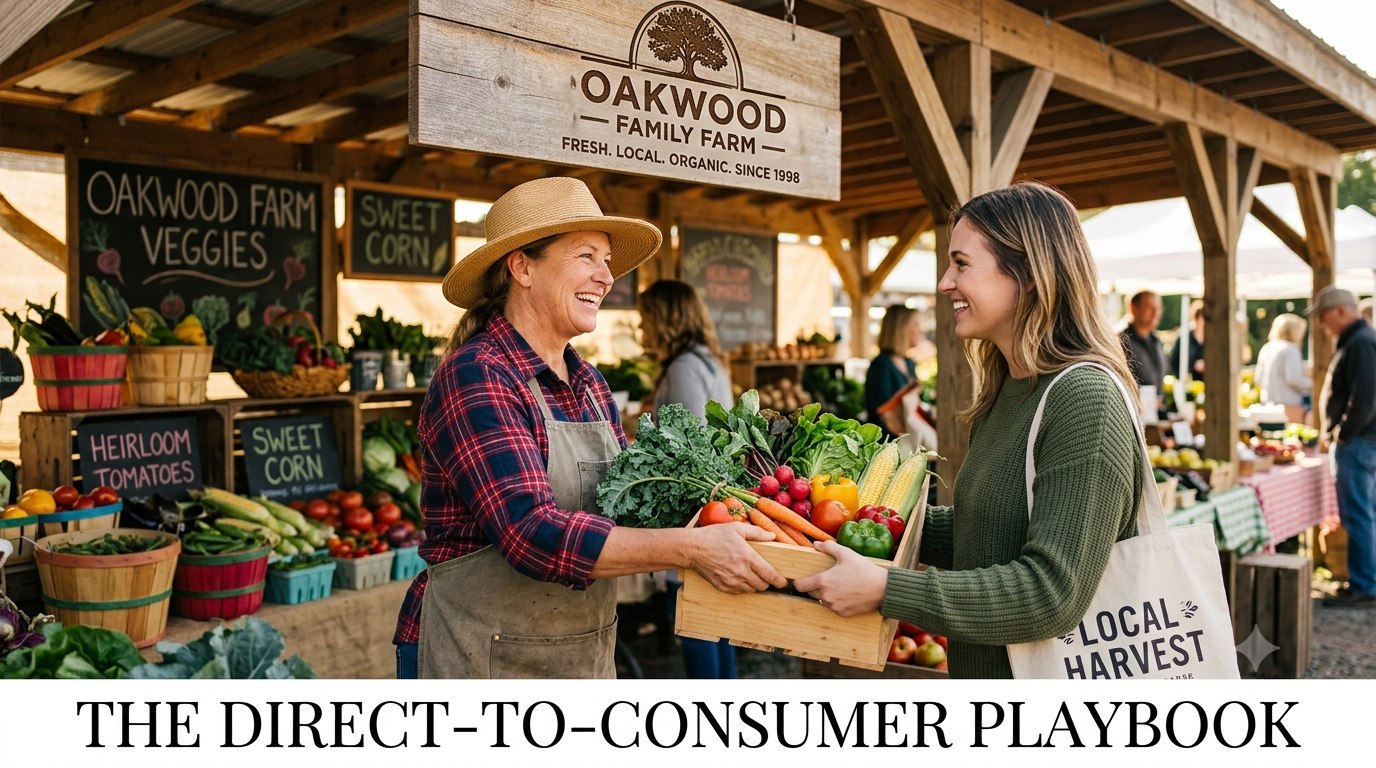
When Fidelity Weston of Romshed Farm in Kent began selling grass-fed beef directly to local families, she noticed something that went beyond the financial benefits. “When they buy from us, they’re not just getting meat, they’re becoming part of the story of this farm,” she says from her farm kitchen .
This sentiment reflects a significant shift in agriculture. In traditional supply chains, farmers can receive as little as 15% of the final retail price . The move to direct sales isn’t just about better margins—it’s about rebuilding a connection that industrial food systems have eroded .
For many farmers, direct marketing has become an economic lifeline and a way to take control of their business’s future. As one farmer put it, “The economic impact is transformative. It means we can stay profitable with fewer animals, giving each one more space and better care” . This guide will show you how to build a direct-to-consumer marketing strategy that works for your farm.
H2: Why Direct Marketing Matters Right Now
The numbers tell a compelling story. Swiss agriculture offers a revealing case study: one in five farms in Switzerland sold some produce directly from the farm in 2023, driven by the fact that farmers there often receive only CHF0.30 of every franc spent in retail—down from CHF0.45 in 1990 .
Direct marketing allows you to:
Capture more value: Instead of accepting wholesale prices, you set your own margins. This is particularly important when input costs are rising and commodity prices are volatile.
Build direct relationships: When you sell directly, you get immediate feedback. As Jeremy Buxton of Eve’s Hill Farm notes, “If a customer asks a question, we answer it forthrightly” .
Tell your story: Direct sales let you communicate your standards and ethos—and sustainability can become “one of your most powerful farm marketing tools” when you make it part of your story .
H2: Understanding What Consumers Actually Want
H3: Trust Is the Currency of Direct Sales
Research on content marketing for agricultural products shows that content focusing on origin traceability and daily situational life builds what academics call “source credibility awareness” . When you show people where their food comes from, you reduce their “perceived risk”—the hesitation consumers feel when buying from an unfamiliar source.
The academic findings are clear: different types of content marketing influence consumers at different stages of their decision journey . At the aware stage, businesses can build trust by combining professional identity with real-life scenarios. During the appeal stage, everyday scenes and immersive emotional experiences enhance resonance. And at the ask stage, explaining risks and using FAQ mechanisms helps keep interest alive.
H3: What Different Customer Types Want
Most agricultural businesses serve multiple audiences. Farm Table recommends creating 2–4 simple audience profiles based on the customers that matter most :
| Audience Type | Primary Concerns | Best Content |
|---|---|---|
| Growers | Yield, labour, water, compliance | Technical guides, trial results |
| Supply chain partners | Consistency, traceability, risk | Process documentation, case studies |
| Rural advisers | Influencing purchasing decisions | Data-driven insights, expert content |
| Direct consumers | Origin, quality, values | Behind-the-scenes, story content |
For each profile, document what a “good year” and a “bad year” looks like to them, where they get trusted information, and what stops them saying yes .
H2: Practical Direct Marketing Channels That Work
H3: The Swiss Farm Shop Model
Switzerland offers a remarkable case study in direct marketing success. Most Swiss farm shops operate on an honour system—customers calculate and pay for their own purchases unobserved. According to a University of Bern study, 95% of goods are paid for correctly .
The drivers of this success? Organic farms are significantly more likely to use direct sales channels—in some Alpine areas, 98% of organic farms engage in direct marketing compared to just 7% of non-organic farms. These farms utilise direct contact with customers to better communicate and monetise their production history, building mutual trust .
Key takeaway: The Swiss model works because of underlying trust built through transparency and consistency. You can implement this by being open about your practices and maintaining high standards.
H3: Community Supported Agriculture (CSA)
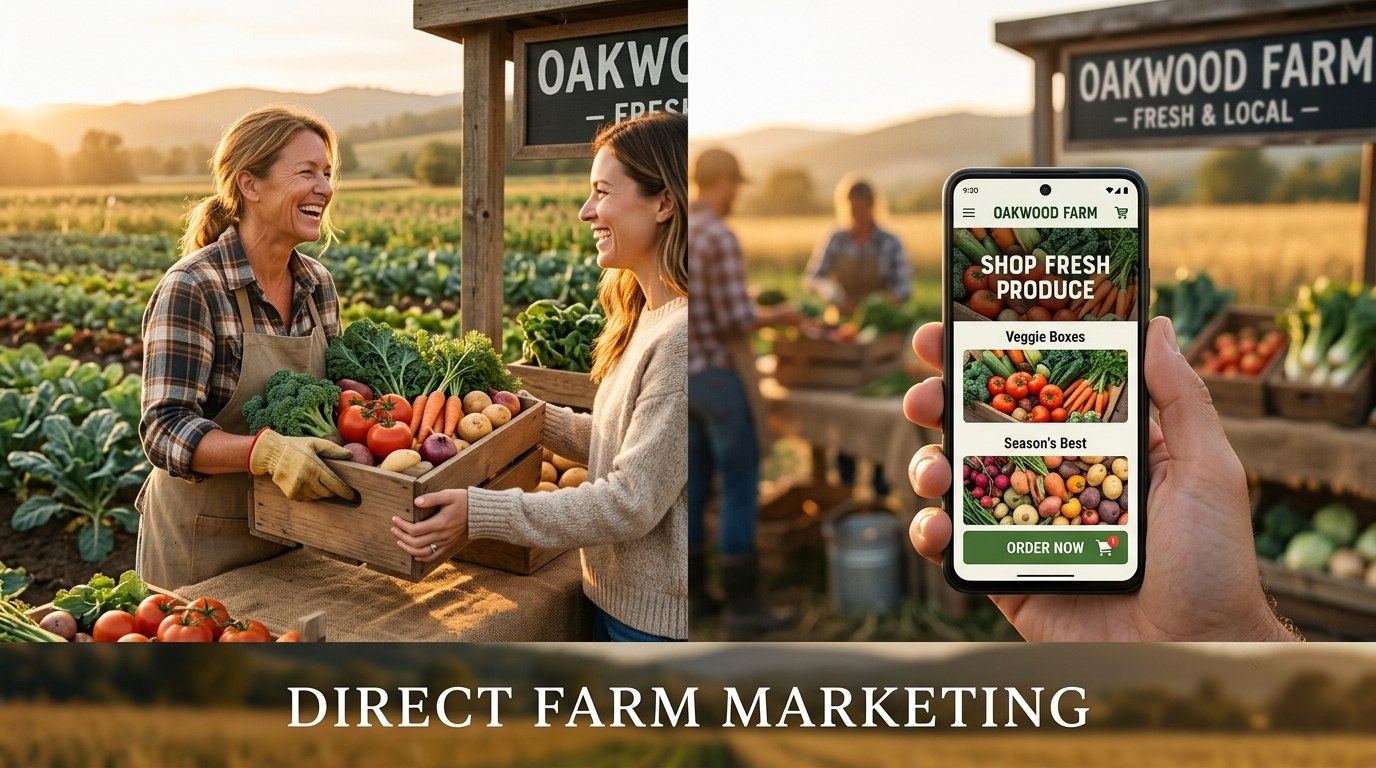
CSA programs represent a model of shared risk and reward . Consumers pre-purchase shares of a farm’s harvest, providing farmers with upfront capital and predictable revenue. In exchange, customers receive regular produce boxes.
This approach demands strong planning, crop diversification, and transparent communication about farm operations. It also creates deep, ongoing relationships—customers become invested in your success.
H3: Farmers’ Markets and Farm Stands
These remain among the most effective direct channels. At Eve’s Hill Farm, Jeremy Buxton launched a crafts and farmers’ market partly to increase awareness of his farm shop. It now hosts 60 stallholders and attracts about 1,500 visitors per market .
Tips for market success:
- Be there consistently—regular presence builds trust
- Use QR codes to capture email addresses and website traffic
- Make payments easy—take all methods
H3: Digital Channels
Online marketplaces, subscription boxes managed via digital platforms, and direct-to-consumer e-commerce websites allow farmers to sell beyond their immediate vicinity . These digital tools streamline order management, payment processing, and customer communication.
H2: Building Your Direct Marketing Strategy
H3: Map Content to the Buying Journey
Farm businesses rarely make major changes overnight. Design content that supports the journey from “I have a problem” to “I will switch supplier” :
Problem-aware: Validate customer pain points—rising costs, access to quality produce, uncertainty about sourcing.
Solution-aware: Explain your options. Why direct from a farm? What are the benefits over supermarkets?
Product-aware: Compare your offering to alternatives. Use transparent data, photos, and real stories.
Most-aware: Make it easy to buy. Provide clear ordering information, delivery options, and trust signals.
H3: Choose High-Impact Content Formats
Agricultural SMEs rarely have full marketing teams. Prioritise formats you can deliver consistently :
- Deep, practical guides: “How to get the most from our monthly meat box”
- Case studies: “How one family switched to local produce”
- Seasonal checklists: What’s available and when
- Short videos: Walk through your farm, show your practices
Create fewer pieces with higher quality and better promotion rather than constant low-value posting .
H3: Tell Your Story Authentically
Marketing expert Hayley Parker emphasises that “sustainable farming practices aren’t just good for the planet—they’re a powerful way to build your farm brand and set yourself apart” . But this only works when “authenticity, transparency and explaining why you make the choices you make all help build deeper connections with your customers” .
What this looks like in practice:
Eve’s Hill Farm uses frequently asked questions on their website to anticipate what customers might want to know, addressing any problems straight away. They host school visits—”they are our customers of the future”—guided tractor tours, and stamp trails for children . These aren’t just marketing activities; they’re relationship-building investments.
H2: Case Studies: Marketing in Action
H3: Strawberry Fields, Devon
Laura Mounce runs Strawberry Fields, which has grown from a pick-your-own operation to include a farm shop, café, restaurant, and major seasonal events. Their marketing success comes from :
Strong branding: Laura is fiercely protective of the Strawberry Fields brand, with branding extending to packaging, labelling, and bags. This consistency builds recognition and trust.
Loyalty programs: A free loyalty card scheme gives customers points, vouchers, and personalised discounts. Email marketing targets customers differently—no meat promotions to vegetarian customers.
Customer-generated marketing: Family-friendly events are photo opportunities, encouraging customers to share photos and do some of the marketing for them.
High standards: “Even the toilets have won awards,” Laura notes. High standards go right through the business, from produce quality to service and staff. Adam and Laura remain hands-on and visible to both staff and customers .
H3: Eve’s Hill Farm, Norfolk
Jeremy Buxton returned to the family farm after a career in sports television. Nine years ago, he and his wife Kathryn started a small campsite and began selling beef boxes. They’ve since added a farm shop and a craft and farmers’ market .
Marketing approach:
- Total transparency: “If a customer asks a question, we answer it forthrightly”
- FAQ-based website content
- Tell their story: “why we are producing grass-fed beef”
- Don’t cut corners: “We live and die by the cleanliness of the toilets and showers”
Key insight: Jeremy says people should not be afraid to invest in expertise: “We’ve just engaged a social media consultant to help us with that side of the business so that we can learn what we can do better” .
H2: Common Mistakes to Avoid
Mistake 1: Failing to engage with customers
Many farms post content but don’t interact. As Hayley Parker notes, social media can work “so much better” if you follow customers, collaborate with aligned businesses, post polls, and invite engagement .
Mistake 2: Not collecting customer data
“If you know a customer is vegetarian, you can tailor your communications so that these don’t include meat promotions” . But you need data to do this. Loyalty cards, email sign-ups, and feedback forms help you target different customers differently.
Mistake 3: Bombarding people
Quality and relevance beat quantity. “Don’t bombard people with communications” .
Mistake 4: Ignoring the customer touchpoints
Look at every experience a customer has with your business—from first contact through transactions and follow-ups. Where can you improve?
H2: Measuring What Matters
- Which pages and topics attract the most engaged traffic and lead to enquiries
- Which emails or posts drive visits from your key regions or segments
- Which pieces your sales and agronomy teams actually use in the field
Each season, decide what to update, repurpose, or retire based on data and feedback .
Recommended metrics:
- Website enquiries
- Quote requests
- Completed contact forms
- Email sign-ups
- Sales calls booked
- Repeat purchase rates
H2: Conclusion
Direct-to-consumer marketing isn’t just a sales channel—it’s a relationship-building opportunity. The farms that succeed in this space understand that people don’t just buy products; they buy into stories, values, and people.
Here is your action plan:
- Audit your current audience profiles: Who are you actually selling to? What do they care about?
- Choose 1-2 direct channels: Start with what’s achievable—a farm stand, farmers’ market, or online store.
- Map content to the buying journey: Ensure you have content for problem-aware, solution-aware, product-aware, and most-aware stages.
- Tell your story authentically: Don’t just sell product—share your standards, your challenges, your values.
- Engage with your customers: Reply to questions, respond to feedback, build community.
- Measure and adjust: Track what works and do more of it.
The direct relationship you build today becomes a source of stability and resilience for years to come. As one farmer put it, “When customers buy from us, they’re not just getting produce—they’re becoming part of the story of this farm” .