Introduction
Here’s something that might surprise you: it wasn’t a marketing expert or a social media agency that turned Matt Davey into an online sensation. It was his grandmother.
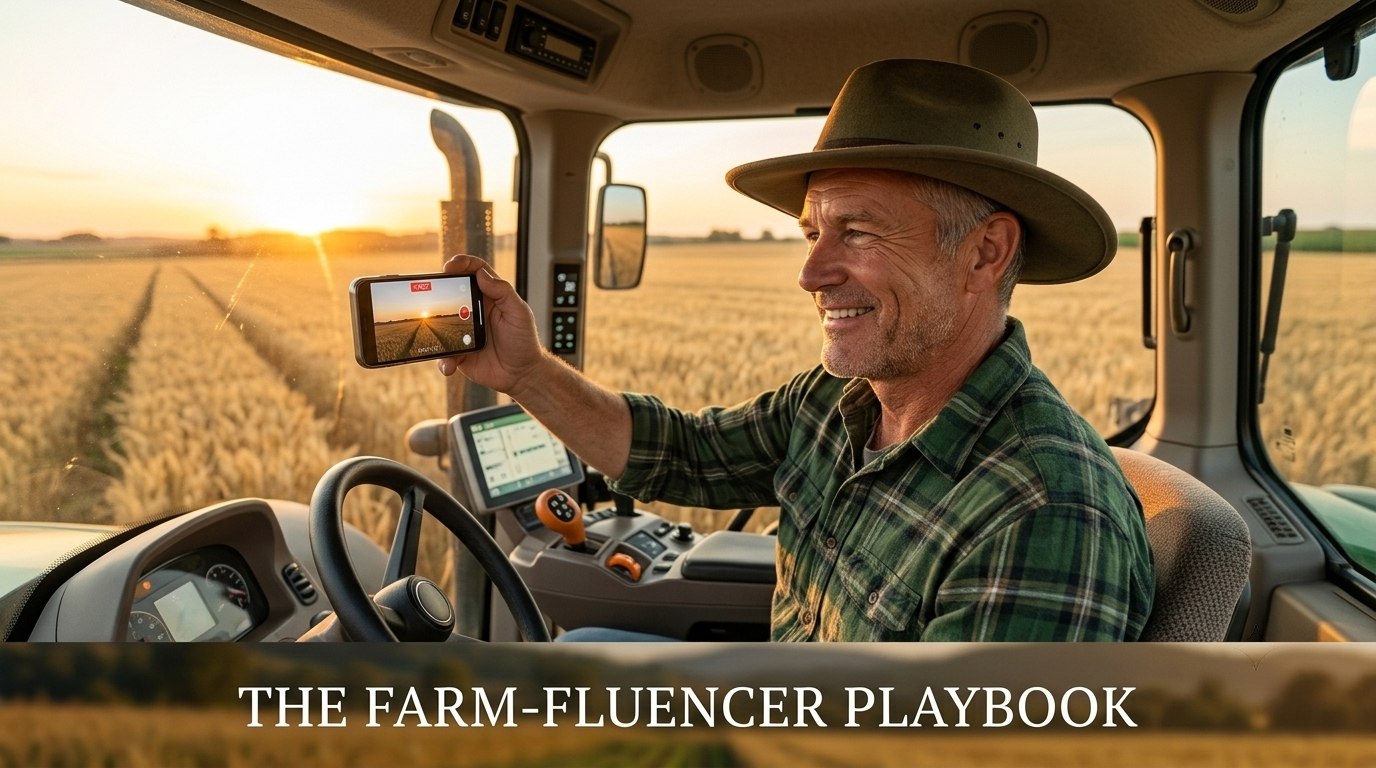
Davey, a farmer on South Australia’s Yorke Peninsula, started posting Instagram videos from his tractor cab so his grandmother—who had moved into a nursing home—could watch the harvest happen in real time. She’d put the livestream on her TV and watch the work unfold .
What started as a family connection project grew into something much bigger. Soon, retired farmers, school students, and city-dwellers from all walks of life were tuning in. “It means that you don’t feel so isolated at times in the paddock, especially when things are tough,” Davey says .
Davey’s grandmother has since passed away, but the community he built continues to grow. His story is far from unique. Across the globe, a new breed of agricultural content creator is emerging—the “farm-fluencer”—and they’re proving that authenticity and consistency can achieve what polished marketing campaigns often cannot .
This guide is your playbook for joining them. We’ll cover the strategies, content types, and practical steps that real farmers are using to build audiences, educate consumers, and even drive sales—all while staying true to themselves.
H2: Why “Farm-Fluencer” Content Works
The rise of agricultural content creators isn’t just about entertainment; it’s filling a massive gap in consumer understanding.
H3: Bridging the Urban-Rural Divide
Henry Coleman, a Mid North farmer with around 10,000 YouTube subscribers, puts it plainly: “There is the disconnect between farmers and rural communities and people in cities. The gap is just getting bigger and bigger, and people are more and more removed from farms.”
His solution? Explain the how and why of everyday farming in a way that’s accessible to everyone—whether you’re a third-generation farmer or a born-and-bred city slicker. This educational approach is the foundation of trust-building .
H3: How Content Actually Influences Consumer Decisions
Academic research on agricultural content marketing reveals a clear pattern. Different content types influence consumers at different stages of their decision journey :
The research found that content marketing isn’t a straight line. It involves back-and-forth between perception, emotion, judgment, and action. The most effective content doesn’t just sell—it builds “source credibility awareness” and triggers “emotional identification,” which motivates consumers to share and recommend products .
H3: The Emotional Connection
As one Vietnamese farmer-turned-content-creator discovered, viewers respond to real stories. Nguyen Duy Hung launched a Facebook and TikTok channel featuring his father, “Uncle Muoi of Quang Nam,” showing daily life along the Vu Gia River—farming, making bamboo items, cooking traditional dishes. The channel reached 5,000 followers quickly, not because of slick production, but because of authenticity .
The result? This content connected viewers to his family’s chili sauce brand. “Customers see not just a product, but also the source of the ingredients, the people, and the story behind it,” Hung explains .
H2: Types of Farm Content That Actually Work
H3: The “Day-in-the-Life” Format
Matt Davey’s harvest livestreams work because they offer a window into a world most people never see. Henry Coleman’s content ranges from his young daughters meeting a newly delivered herd of cattle to difficult discussions about human error and broken machinery. “It’s real. It’s day-to-day farming,” he says .
What to film:
- Start your tractor in the morning
- The sunrise over your paddocks
- A walk through a crop or livestock check
- A moment of frustration (broken machinery, bad weather)
- A moment of joy (healthy animals, good harvest)
Why it works: It shows the reality, not the highlight reel. This builds trust .
H3: The Educational Series
Shannon Donoghue, a wool industry professional in South Australia, created a year-long series called Weekly Wool Facts. She pairs it with mesmerising drone shots of shearing sheds, mobs of sheep, and outback landscapes. Her TikTok videos have racked up nearly 10 million views .
What to share:
- “Why we’re doing this right now”
- “What this piece of equipment does”
- “How to tell if [animal/crop] is healthy”
- “The reason behind this practice”
H3: The “Story Behind the Product”
Tran Quoc Tuan brought his family’s traditional peanut oil pressing business to modern digital platforms. His channel, “Uncle Bang’s Oil Pressing,” centres on his father telling stories about the profession, farmers’ lives, and the oil-making process. The channel attracted nearly 9,000 followers in a short time .
“I believe that farmers must know how to do business, they must proactively sell their products,” Tuan says. “The peanut oil from my hometown has a fascinating story, so I wanted to share it on social media.”
Since building these channels, his family’s oil brand has expanded distribution to restaurants, hotels, and resorts. Revenue has doubled .
H2: The Practical Steps to Becoming a “Farm-Fluencer”
H3: Start With Your Why
Matt Davey’s reason was clear: keeping his grandmother connected. This clarity made consistency easy. What’s yours?
- Connecting with family?
- Educating consumers?
- Building a customer base for your products?
- Fighting misinformation?
When your “why” is personal, your content will be authentic.
H3: Choose Your Platform Wisely
H3: Be Consistent
This doesn’t mean posting daily. But it does mean posting regularly. Matt Davey streams harvest, Henry Coleman posts regularly, and “Uncle Muoi of Quang Nam” releases a 1-2 minute video daily .
The research backs this: Consistency builds credibility. Rick Harrison from Farm Trader explains: “The more that you see something, the more familiar you are with it—and the more you expect it to be there.”
H3: Stay Real
Here’s a key finding from the academic research: content authenticity is a growing challenge. Some content is created simply to attract attention, using fake “poor life” scripts or fabricated stories. This undermines consumer trust .
The solution? Don’t script everything. Don’t pretend things are perfect when they’re not. Share the ordinary moments—they’re what people connect with. As Henry Coleman says, “Sometimes you can feel like, ‘Why is this happening to me?’ or, ‘It seems like bad things are only happening to me.'” Sharing these moments builds community .
H3: Engage, Don’t Just Broadcast
Vinaseed, an agricultural company in Vietnam, discovered that engaging is as important as posting. Every question from a farmer, even just a comment, is answered promptly. This dedication has become their “soft power.” As one distributor noted: “Only Vinaseed has marketing staff who also sell, who teach like engineers, answering every question from farmers.”
Engagement strategies:
H2: Common Mistakes to Avoid
Mistake 1: Over-Polishing
Farm audiences value authenticity. A raw clip from the paddock often outperforms a slick production.
Mistake 2: Preaching to the Converted
Thanh Truong, the “Fruit Nerd,” warns that agricultural content creators often preach to the converted rather than connecting with consumers further down the supply chain . If you only talk to other farmers, you’re missing the people who need education most.
Mistake 3: Not Taking Content Seriously as Marketing
Some farmers see social media as a hobby. But as Rick Harrison notes, “Marketing isn’t just for big brands – it’s a vital part of running a successful farm.”
Mistake 4: Forgetting the “How to Buy”
Content is wasted if people can’t act on it. Add clear calls to action: links to your website, farm gate details, ordering information .
H2: Conclusion
Matt Davey never set out to be a content creator. He just wanted his grandmother to see the harvest. The audience came because he offered something real.
That’s the power of agricultural content creation. You don’t need a marketing degree. You don’t need a professional studio. You just need to share your world with honesty and consistency.
The “farm-fluencer” movement is about more than social media fame. It’s about bridging the gap between rural and urban, educating consumers, building community, and creating new opportunities for farm businesses.
So grab your phone. Start filming. Your audience is waiting.