Introduction
For years, we’ve focused on the written word in agriculture—blog posts, articles, email newsletters, and social media captions. These are all powerful tools. But in today’s fast-paced, visually driven world, there are two content frontiers that many farmers and agribusinesses have yet to fully explore: podcasting and video.
Think about how you consume information. Are you listening to a podcast while driving the tractor or fixing a fence? Are you watching a quick video to learn how a new piece of equipment works? Your customers and peers are doing the same.
Recent industry surveys confirm this shift: farmers and ranchers are increasingly relying on mobile apps, streaming audio, podcasts, and video as they spend more time away from the farm . While traditional media like print and radio remain trusted , the modern farmer’s media diet is a hybrid one .
This guide is designed to be your practical roadmap for entering the exciting world of audio and video content. We’ll break down the ‘why’ and, more importantly, the ‘how’—helping you start a farm podcast, create compelling video, and share your story with the world, all without needing a Hollywood budget.
H2: Why Audio and Video? The Case for Going Beyond Text
You might be thinking, “I’m a farmer, not a broadcaster.” That’s exactly the right mindset. Authenticity is your greatest asset. Here’s why audio and video are so effective for agricultural content:
1. Building Unparalleled Trust
Video is a powerful tool for building trust by showing transparency . Consumers are curious about where their food comes from and want to see it with their own eyes. A video of you walking through your barn, inspecting your crops, or talking about a challenge you’re facing is far more powerful than any written description .
2. Meeting Your Audience Where They Are
Farmers are busy. Podcasts are consumed while driving tractors, feeding animals, or working in the workshop . Video is consumed on social media platforms like Facebook, Instagram, and YouTube during downtime . This content fits seamlessly into the agricultural lifestyle.
3. Explaining Complex Topics with Ease
Some things are just easier to show than to tell. How do you verbally describe the sound of a properly running combine? Or the perfect soil texture? Video and audio allow you to capture the sensory details that are lost in a written article.
4. Reaching New and Wider Audiences
The “Discover Ag” podcast, hosted by two women in agriculture, shares the latest news and trends with a wide audience of farmers, ag enthusiasts, and consumers . By creating audio or video content, you’re not just preaching to the converted; you’re reaching people who are searching for answers and entertainment.
5. Becoming the Go-To Source
AI answer engines are changing how people search for information . They are hungry for content that demonstrates Experience, Expertise, Authoritativeness, and Trustworthiness (E-E-A-T) . By producing in-depth podcasts and videos, you are creating a rich body of work that establishes you as a credible authority in your niche, making you more discoverable .
H2: Starting Your Own Agricultural Podcast
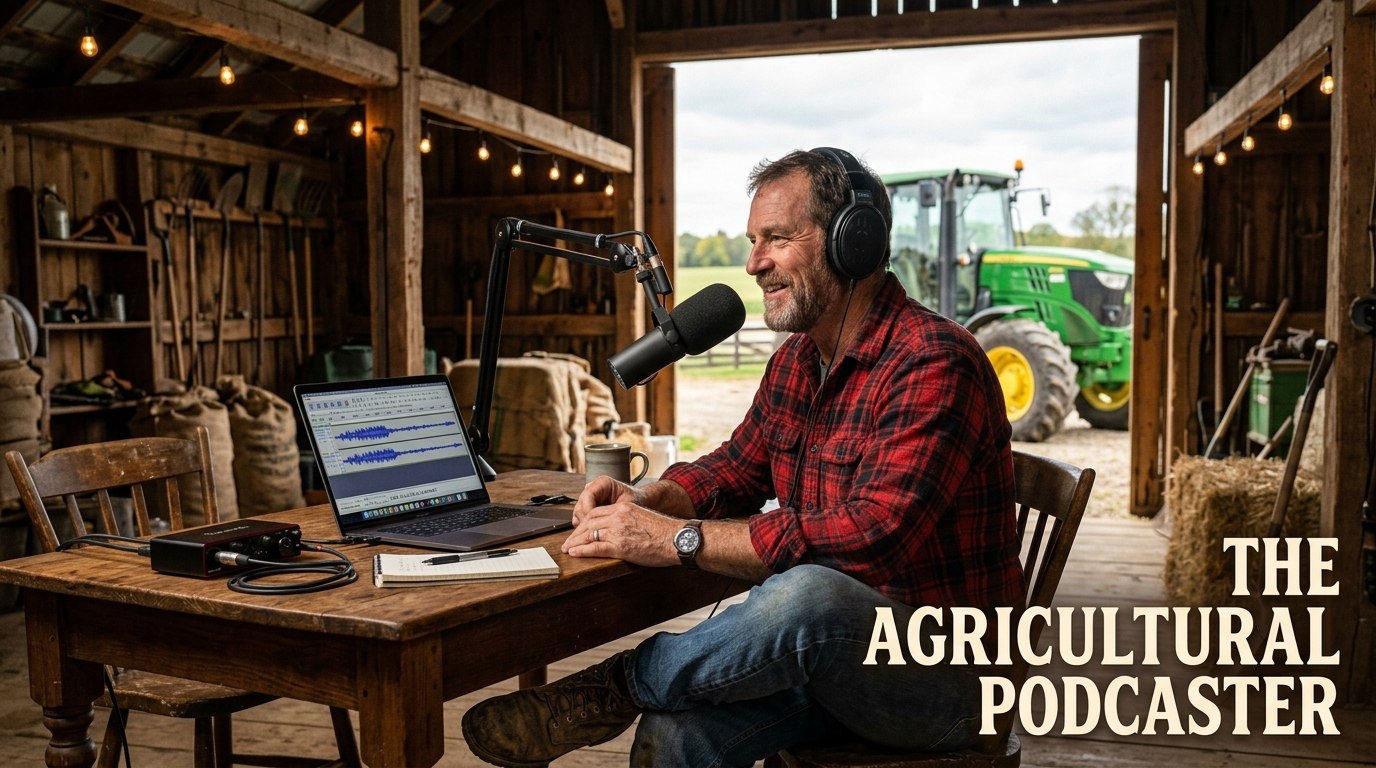
Podcasting is quickly becoming one of the most powerful platforms for sharing stories, building community, and showcasing niche industries—and agriculture is no exception .
H3: Step 1: Define Your Niche and Audience
This is your most important step. The agricultural industry is vast . Are you targeting dairy producers? Regenerative graziers? Young, beginning farmers? The more specific your niche, the easier it is to grow an engaged and loyal audience .
- For example: “A podcast for female livestock producers in the Pacific Northwest” is a far stronger and more focused concept than “A podcast about farming.”
H3: Step 2: Decide on Your Format
There are several common podcast formats :
- Solo episodes: You share your own insights, stories, or updates from your farm. This is a great way to build a personal connection.
- Interview-based: You bring on guests such as fellow farmers, agronomists, veterinarians, or rural leaders. This brings in fresh perspectives and expert knowledge.
- Narrative/Documentary: You weave together a story from multiple voices, often including on-location sounds to create an immersive experience.
H3: Step 3: The Tech Kit (It’s Easier Than You Think)
You don’t need a professional studio to start. Here’s what you need:
- Microphone: A good USB microphone like the Audio-Technica ATR2100x or Samson Q2U is affordable and produces excellent quality for a beginner .
- Headphones: Simple headphones help you monitor audio quality and avoid feedback.
- Recording Software: Free options like Audacity (PC) or GarageBand (Mac) are perfect for starting out. For remote interviews, consider Riverside or SquadCast .
H3: Step 4: Publish and Distribute
You’ll need a podcast hosting platform to publish your episodes. These platforms generate an RSS feed, which allows your show to be distributed to all major podcast apps like Apple Podcasts and Spotify .
H3: Step 5: Promote and Stay Consistent
Your first episode is just the beginning. You need to promote it . Share clips on social media, send a launch announcement to your email list, and collaborate with other podcasters for cross-promotion . Most importantly, stay consistent. Whether it’s weekly or bi-weekly, a regular schedule is key to building an audience .
H2: Creating Compelling Agricultural Video Content
Video is a game-changer for telling your farm’s story. It can be used for everything from showing daily life to marketing your products .
H3: Types of Videos That Work
- Educational Content: How-to guides, equipment demonstrations, and walkthroughs of your practices. These build your authority and provide immense value to your audience .
- Marketing Promos: Use a “video ad generator” to quickly create advertisements for specials, new products, or your farm market . Showcase your fresh produce or the family atmosphere of your farm.
- Real-World, Unpolished Clips: Don’t be afraid of this. One of the most powerful aspects of video is authenticity. An unscripted, 30-second video of a moment on the farm can often outperform a highly polished production . As one ag content creator noted, authenticity is about finding a balance, “you don’t owe the internet access to your soul,” but sharing real moments builds genuine connection .
- Behind-the-Scenes: Show viewers what they don’t usually see. A dairy farm can post videos of animal care to emphasize transparency . Short, silly videos of life on the farm or the family can also be a powerful way to connect .
H3: Step 1: Focus on the Hook
On platforms like TikTok and Instagram Reels, you have just 3 seconds to grab a viewer’s attention . Start your video with a strong “hook”—a surprising shot, an intriguing question, or a clear call to action to stop them from scrolling .
H3: Step 2: Mastering the Basics of Editing
You can create professional-looking videos without expensive software . The key is to use simple, effective editing techniques:
- Use AI-Powered Editing Tools: Free AI video editors can help you trim clips, balance audio, and even add captions automatically . Captions are essential, as many people watch videos without sound .
- Speed It Up: A “video speed changer” allows you to condense a long process like planting or harvesting into an engaging time-lapse . This turns a two-hour time-lapse into a five-minute highlight reel.
- Keep It Real: As Dena Lewis of One Mile Ranch puts it, “People want to feel something. They don’t want to be sold a product” . Viewers appreciate authenticity far more than a flashy, sales-focused video. “They’re not just promoting. They are showing, teaching and reacting in real time,” .
H3: Step 3: Plan Your Social Strategy
Simply posting videos isn’t enough. You need a strategy .
- Define Your Goal: What are you trying to achieve? Brand awareness? Customer relationships? More sales at your farm gate? This shapes your content .
- Know Your Audience: What are they interested in? What questions are they asking? Tailor your videos accordingly .
- Create a Content Framework: Choose 2-3 repeatable themes to reduce the stress of “what should I post today?” .
- Collect Content: “Every day, or as much as you can with the time you have, try to film multiple clips in one go to save time and reduce stress” . You can reuse these clips across multiple platforms .
H2: Key Takeaways for Long-Term Success
- Guard Your Interior Life: This is the most important piece of advice from Dan Venteicher (IowaDairyFarmer). Sharing your life online can be overwhelming. “Your peace must be protected” . You have to work at it. Remember, “you don’t owe the internet access to your soul” .
- Engagement Is Not Fulfillment: “Likes do not equal meaning” . A video that goes viral is a moment. The next one might not. That’s normal. Root your self-worth deeper than the comment section .
- Silence Is Not Weakness: You don’t need to comment on everything . It’s okay to take breaks. If social media becomes overwhelming, step away .
- The Power of Partnerships: As you grow, opportunities for brand partnerships may arise . Successful agricultural content creators are increasingly business-minded about these relationships. They seek long-term partners and only work with brands that “align with my brand, it’s a no from me” . This authenticity is what builds and maintains trust with your audience .
H2: Conclusion
The world of audio and video can feel daunting, but it’s one of the most powerful ways to connect with your customers and build trust. Remember, you don’t need to be a Hollywood producer. You just need to be you—a dedicated farmer with a story to tell. Start small, stay consistent, and focus on providing value. Your audience is out there, and they’re waiting to hear from you.