Introduction
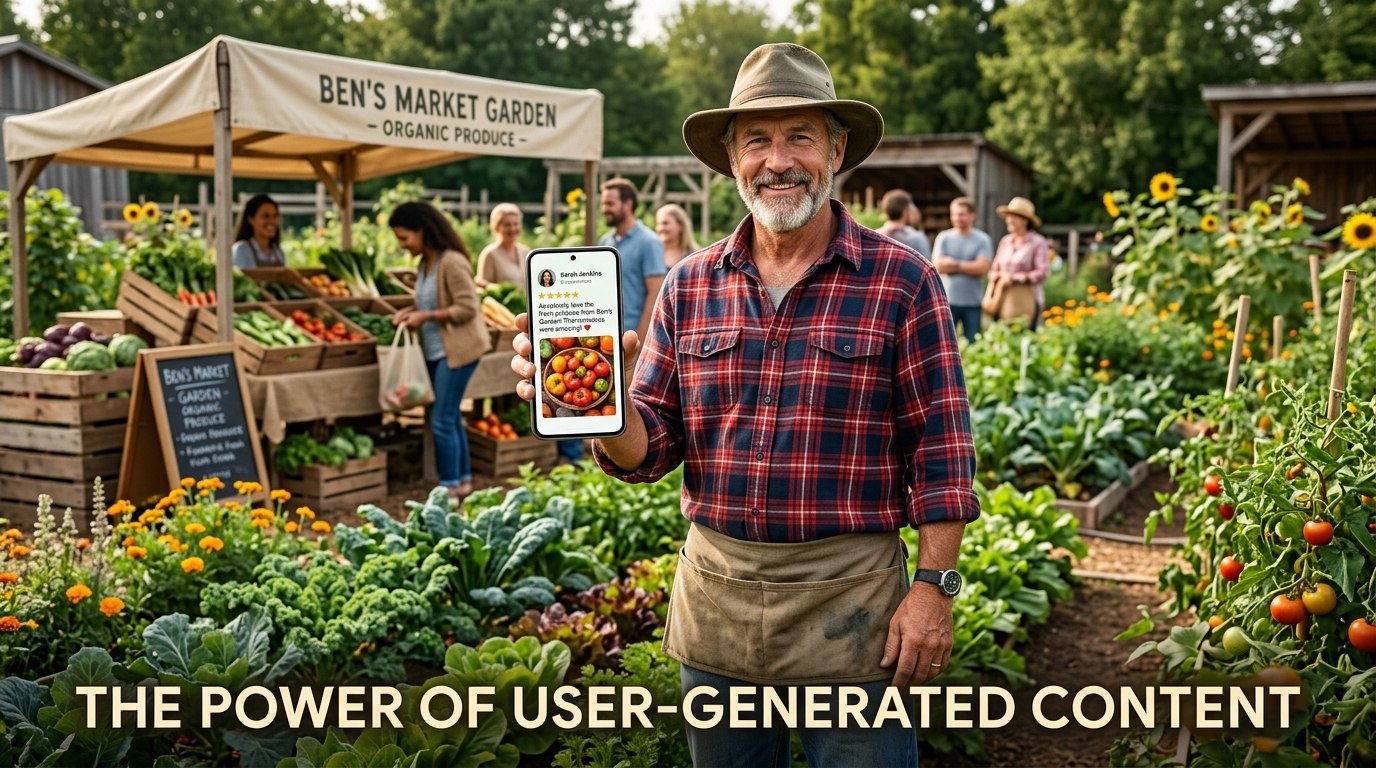
Imagine having a team of marketers who work for free, create authentic content that resonates with your target audience, and build trust with potential customers in ways your brand could never achieve on its own. That’s the power of user-generated content (UGC).
Your customers are already talking about your products—they’re posting photos of their meals, sharing recipes, and telling their friends about their favourite farm shop. The question is: are you leveraging that content to grow your business?
This guide explores how agricultural businesses can harness the power of user-generated content to build trust, drive sales, and create a community of loyal advocates.
H2: What Is User-Generated Content and Why Does It Matter?
H3: Defining UGC
User-generated content is any content—photos, videos, reviews, social media posts, or testimonials—created by your customers rather than your business. It’s authentic, trustworthy, and often more influential than branded content.
H3: The Trust Advantage
Research consistently shows that consumers trust content from other consumers more than they trust brand-created content. In fact:
- 92% of consumers trust organic, user-generated content more than they trust traditional advertising
- UGC is considered 2.4 times more authentic than brand-created content
- 88% of consumers say authenticity is important when deciding which brands they like and support
For agricultural products, this trust is particularly important. Customers are increasingly disconnected from where their food comes from, and seeing real people using and enjoying your products helps bridge that gap.
H2: Why UGC Works for Agriculture
H3: Building Trust Through Social Proof
When potential customers see others enjoying your produce, meat, or dairy products, it reduces their hesitation to buy. This is what researchers call reducing perceived risk. People think: “If others are happy with this product, I probably will be too.”
H3: Authenticity in a Skeptical World
Consumers are bombarded with polished advertising. UGC offers something different—real people in real kitchens using real products. It feels genuine because it is genuine.
H3: Content That Reshapes Perceptions
Research on agricultural content marketing found that emotional identification motivates consumers to share and recommend content. When customers share their experiences with your products, they’re not just providing social proof—they’re telling a story that reshapes how others see your farm.
H3: A Community-Building Tool
When you feature customer content, you acknowledge and value your customers. This builds loyalty and encourages others to share their experiences, creating a positive cycle of engagement.
H2: Types of UGC That Work for Farms
H3: Recipe Photos and Videos
Your customers are cooking with your produce. Encourage them to share their culinary creations. These posts show your product in action and provide ideas for other customers.
How to encourage it: Create a recipe challenge. Ask customers to share their best dish using your produce with a specific hashtag. Offer a prize—a farm voucher, free delivery, or a prize bundle.
H3: Customer Stories and Testimonials
Personal stories are powerful. When a customer shares how your product became part of their family tradition, it resonates deeply with others.
How to encourage it: Interview a loyal customer and share their story. Or ask customers to share their “why” for buying local and sustainable.
H3: “A Day on the Farm” Photos
When customers visit your farm or farm stand, they often take photos. Encourage them to share these moments.
How to encourage it: Create a photo spot at your farm stand or market stall. As Hayley Parker of Flame Marketing notes: “Offer a photo spot at your business, they will post their pictures and do some of your marketing for you.”
H3: Reviews and Ratings
Reviews are the most common form of UGC and one of the most influential. Positive reviews build trust and help new customers feel confident purchasing.
How to encourage it: Ask satisfied customers to leave a review on your website, Google, or social media. Make it easy—provide a direct link.
H3: Social Media Mentions
When customers tag your business in their posts, it’s free advertising to their network.
How to encourage it: Share customer posts on your own feed. This shows appreciation and encourages others to tag you in future.
H2: How to Encourage User-Generated Content
H3: Make It Easy to Share
The easier you make it for customers to share content, the more content you’ll receive.
- Create clear, branded hashtags
- Add QR codes to packaging that link to review forms
- Encourage photos at your farm stand
- Offer photo-friendly packaging
H3: Ask, Don’t Just Wait
Many customers would be happy to share their experience but simply don’t think to do it. Ask them.
Sample requests:
- “We’d love to see how you use our tomatoes—tag us in your photos!”
- “If you love our produce, please leave a review—it helps other families find us.”
- “Visiting the farm? Snap a photo and share it with us!”
H3: Create Incentives
Everyone loves to feel appreciated. Offer rewards for customers who share content:
- Enter everyone who tags you in a post into a monthly draw for a farm voucher
- Offer a discount on their next order for leaving a review
- Feature the best photos on your social media
Research on Thai agricultural marketing found that while positive reviews enhance trust, overly aggressive cross-promotion can overwhelm customers. The recommendation is to keep it simple: ask, reward lightly, and let the authenticity shine.
H3: Respond and Acknowledge
When customers share content, acknowledge it. A simple “Thank you for sharing! We love seeing our produce in your kitchen” goes a long way toward building loyalty and encouraging others.
H3: Feature Customer Content Prominently
When you feature customer content, it shows you value your community and encourages others to share their experiences.
Where to feature UGC:
- Social media
- Email newsletters
- Website
- Farm shop display
H2: Real-World Examples of UGC Success in Agriculture
H3: Strawberry Fields (Devon, UK)
Laura Mounce runs Strawberry Fields in Devon, which has grown from a pick-your-own operation to include a farm shop, café, restaurant, and major seasonal events. Her family-friendly events are designed as photo opportunities, encouraging customers to share their photos and “do a lot of marketing for you.”
H3: The Kenyan Farmfluencer Campaign
The “Farmfluencer” campaign in Kenya trained 40 motivated farmers in social media and digital content creation. By empowering them to share authentic stories, they connected directly with consumers and built trust through genuine user-generated content.
H3: Thai Agricultural E-Commerce
Research in Thailand found that customer reviews and engagement with user-generated content significantly enhanced trust and purchase intention. Consumers placed high value on the opinions of other customers, making UGC a powerful driver of sales.
H2: Legal and Ethical Considerations
H3: Permission and Credit
Always ask for permission before sharing customer content. Credit the creator clearly—a simple “Photo by @customer” builds goodwill.
H3: Authenticity Matters
Never fake UGC. Research warns that fabricated content—whether fake reviews or staged photos—undermines consumer trust and can damage the reputation you’ve built over years.
H3: Transparency
Be transparent about any incentives you’ve provided for content. If you offered a discount for a review, disclose it.
H2: Measuring the Impact of UGC
H3: What to Track
- Engagement: Likes, shares, comments on UGC posts
- Reach: How many people see UGC content
- Conversions: Has the UGC led to sales?
- Customer acquisition: Are new customers mentioning UGC as their reason for buying?
H3: Qualitative Feedback
Don’t just look at numbers. What are people saying? What themes emerge in customer content? This qualitative feedback can inform your marketing strategy.
H2: Conclusion
User-generated content is one of the most powerful, cost-effective marketing tools available to farmers and agri-businesses. It builds trust, provides authentic social proof, and creates a community of loyal advocates who do your marketing for you.
The key is making it easy for customers to share, asking them to do so, and responding with genuine appreciation. When you turn your customers into storytellers, you don’t just get free marketing—you build relationships that last.